Why Do I Eat When I'm Not Hungry? Understanding Emotional Eating, and how Brainspotting Therapy Can Help
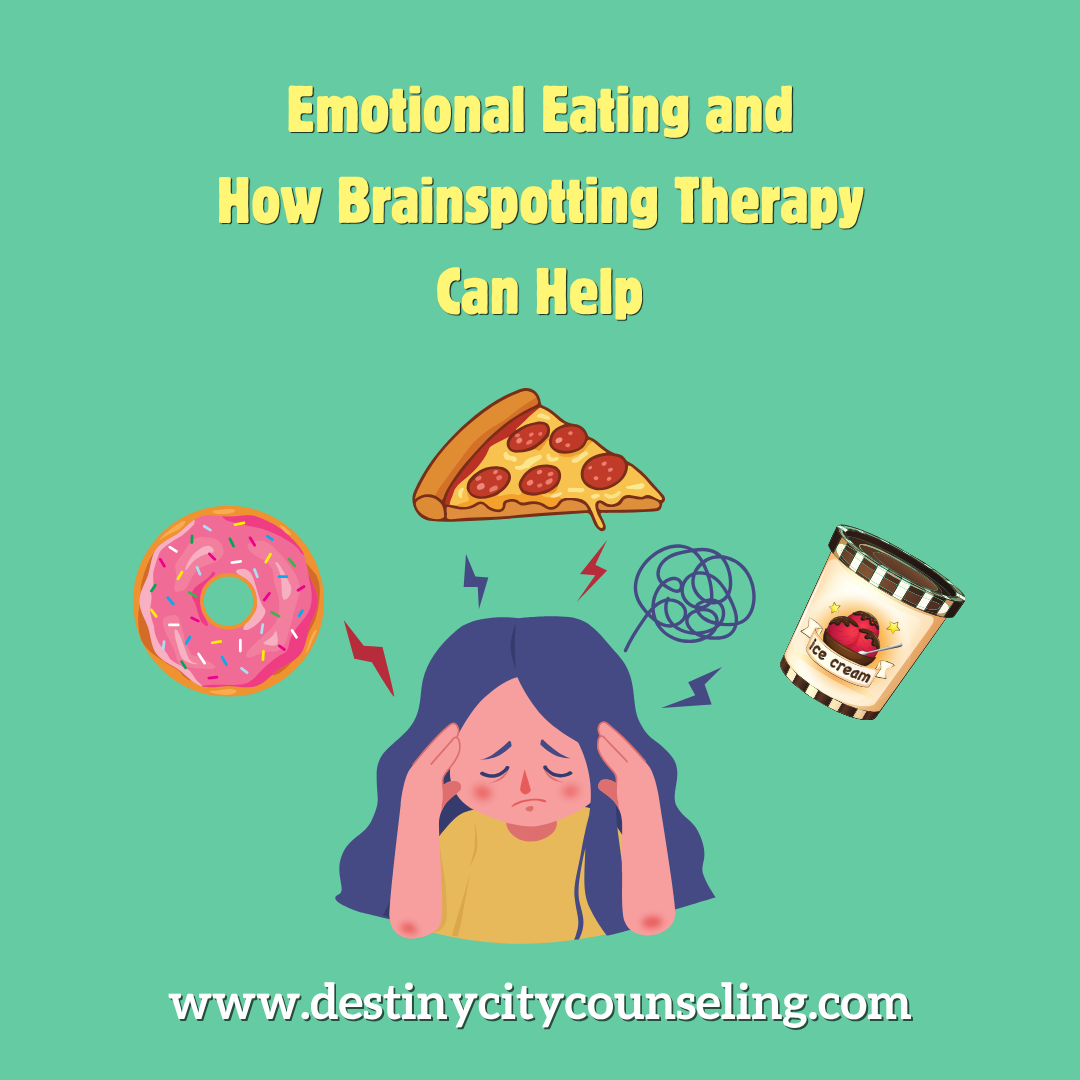
Dinner is over. The kitchen is clean. You aren't hungry. At least, you don't think you are.
Somehow, though, you end up standing in front of the pantry. You grab a handful of crackers. Then a few cookies. Before long, the bag is empty, and you're feeling regretful. You’re left wondering, "How did I get here again?"
If that sounds familiar, you're in good company. I’m a therapist in Tacoma, WA and this is a common issue that clients bring into my therapy office. Clients come in wanting to understand why they gravitate toward food when they aren’t hungry. The interesting thing is, by the end of our conversation, we're rarely talking about food anymore.
We end up talking about the pressure of taking care of everyone else. Or growing up in a home where emotions weren't talked about. Or feeling like they always had to get everything right. Or the loneliness that settles in after the kids go to bed. Food was simply the doorway into a much bigger conversation.
If you've been frustrated with yourself because you keep turning to food when you aren't physically hungry, I'd love to offer another way of looking at it. Your relationship with food didn't develop by accident. Like most coping strategies, it probably developed for a reason.
Understanding that reason doesn't instantly change your habits. But it does make it a little easier to replace self-criticism with curiosity, and that's often where meaningful change begins.
What Is Emotional Eating?
Emotional eating simply means eating in response to emotions rather than physical hunger.
That may sound straightforward, but it's unfortunately the phrase “emotional eating” for some people can be loaded with a lot of shame. In this article, I want to peel back the layers of shame and understand what purpose we use emotional eating for, and what options we have to change that.

Destiny City Counseling can help you understand emotional eating if you’re looking for therapy in Tacoma, WA.
The reality is that all of us find ways to regulate our emotions. Some people go for a run after a stressful day, or call a friend, or get lost in a good book, or scroll social media longer than they planned. Some people pour a glass of wine, or reach for a bowl of ice cream.
Food is just one of many ways human beings soothe themselves.
Food is also woven into so many meaningful parts of life. Holidays, traditions, celebrations, and more. Think of birthday cake with family, or your grandmother's cinnamon rolls on Christmas morning, or the pizza party after your kid's soccer game. Or maybe it's soup when you're sick and someone wants to take care of you.
Long before we understand calories or carbohydrates, we learn that food is connected to comfort, celebration, tradition, and relationships. And there's nothing wrong with that.
Where people begin to struggle is when food starts carrying more and more of the emotional load. It becomes the place we go after a stressful meeting, a difficult conversation, an evening of loneliness, or a wave of anxiety. Over time, that pattern can start to feel automatic. And over a longer period of time, it may contribute to health effects that we don’t want.
Is It Physical Hunger or Emotional Hunger?
When we are trying understand why we reach for food when we aren’t hungry, we need to ask ourselves this question:
"What kind of hunger am I experiencing?"
Sometimes the answer is obvious, and sometimes it’s not easy to discern.
Physical hunger often develops gradually. You might notice your stomach growling, your energy dropping, or that it's simply been several hours since you've eaten. Most foods sound reasonably appealing when you’re truly hungry.
Emotional hunger tends to have a different feel. It often shows up suddenly. It usually wants something very specific. These specific cravings may be foods that are highly palpatable, high in fat or sugar, and associated with comfort.
Emotional hunger often arrives shortly after an emotional experience—a stressful email, an argument, boredom on a Sunday afternoon, or finally sitting down after spending the entire day taking care of everyone else.
A few questions you might ask yourself are:

“What emotion word describes what I’m feeling right now?” is a helpful question when you are discerning between physical and emotional hunger.
What emotion words describe what I am feeling right now?
When did this feeling start?
Has anything stressful happened today?
Are there a variety of foods that would satisfy me, or am I craving something particular?
If I couldn't eat right now, what emotion might I have to sit with?
None of these questions are meant to talk you out of eating, or bring any sense of judgement or shame. They are simply ways to try and understand what’s happening inside of you and what’s driving your hunger—is it physical or emotional? Sometimes it’s both—you're physically hungry and emotionally exhausted.
Sometimes having dessert after a hard day is exactly what you want, and there's nothing wrong with that. The goal isn't to analyze every bite you take. It's simply to become a little more aware of what your mind and body are asking for.
the connection between trauma and emotional eating
As we explored above, a key to understanding emotional eating is understanding the emotions underneath that we are feeling, or maybe the ones we are scared to feel, or don’t realize we are suppressing. We might only recognize that we are agitated, unsettled, or empty feeling—so we reach for food to find comfort, to feel filled up, or distracted.
If we have a hard time recognizing our emotions or knowing how to comfort ourselves, it may be because of past trauma. The word “trauma” can be a stumbling block sometimes. Many times, clients who come to therapy for emotional eating have sat in my office and said, "Nothing that bad happened to me. So many people had it worse."
Usually they're comparing themselves to the worst things they can imagine—combat, abuse, serious accidents, or natural disasters. And of course those experiences absolutely can be traumatic, but trauma can be a lot more subtle, too.
A better definition is trauma is what happens inside us when an experience overwhelms our ability to cope.

Trauma, especially childhood trauma, leads us to search out survival skills and coping in many ways.
That means two people can live through similar situations and walk away with very different experiences. Our nervous systems don't all respond the same way. Sometimes trauma comes from one overwhelming event, and sometimes it develops quietly over years.
It can occur as the result of experiences such as:
never feeling quite good enough
growing up with unpredictable or preoccupied caregivers
being bullied
hearing criticism much more often than encouragement
feeling responsible for everyone else's emotions
being forced to function like an adult when you were only a child
learning that expressing your own feelings wasn't safe
living with chronic stress or conflict at home
Many people dismiss these experiences because they don't seem dramatic enough. Yet these are exactly the kinds of stories I hear every week in therapy. This kind of trauma matters because it shapes how our nervous systems learn to find safety.
The Ways We Learn to Find Comfort Often Begin in Childhood
When it comes to childhood trauma, something important to remember is that kids don't get to choose their environments. Children have to adapt to them.
Think back to your own childhood for just a minute. When you were upset as a child, what usually happened? Did someone notice? Did they take time to listen to how you were feeling? And help you learn to name your emotions, even when they were confusing or embarassing? Did they help you calm down and feel safe? Were your feelings welcomed, or criticized? Did you experience connection when you were upset, or did you mostly learn to deal with feelings all on your own?
There's no such thing as perfect parenting, so this isn't about blaming mothers or fathers. Parenting is incredibly difficult, and every family has moments they wish they could do over. This is simply about understanding how children learn. Our earliest relationships become our first teachers when it comes to finding comfort and safety.
If someone consistently helped you through hard moments, your nervous system learned that people could be safe places to bring your emotions. If comfort wasn't consistently available, your nervous system got creative. Here are some of the ways that resourceful kids find survival strategies to find comfort:
Some become perfectionists.
Some become comedians.
Some stay busy every waking minute.
Some become the caretaker in the family.
Some disappear into books or screens.
Some discover that food reliably helps them feel a little better.
None of these survival strategies are signs of weakness. They're signs of a remarkably resilient brain trying to help a child get through difficult circumstances.
But what gets us through as kids might not keep working for us as adults. Some of these coping skills come with negative side effects that can catch up to us if we don’t learn to find comfort and safety in other ways.
Maybe Your Relationship With Food Is Trying to Tell You Something
So when we are talking about our relationship to eating food when we aren’t physically in therapy, we are often talking about things we may not have ever named before. Maybe we're talking about grief, loneliness, or the pressure of trying to hold everything together. Sometimes we're talking about a lifetime of believing, "If I could just be better, I'd finally feel okay." Food has a way of becoming part of these stories because it offered temporary relief from them.
That's why it’s often more interesting to explore what happened during the thirty minutes before someone started eating than in what they actually ate. Instead of asking, "Why can't I stop eating?” the more interesting question is, "What was happening inside me that made food feel like the best option in that moment?"
When you ask these questions out of curiosity and compassion instead of shame, you’re on the road to change.
Shame and the emotional eating cycle
Speaking of shame, the shame cycle is one of the reasons that emotional eating perpetuates itself.
You probably know the voice. After an overwhelming day and an empty pint of ice cream, it says:

Beating ourselves up doesn’t help solve emotional eating, and tends to just make it worse.
"Well, today is ruined."
"I have absolutely no self-control."
"Why do I always do this?"
“I’m such a loser".”
It's a harsh conversation, and sadly it's one many people have with themselves almost every day.
The problem is that feeling ashamed doesn't usually make people feel more motivated. It makes them feel discouraged. And when we're discouraged, overwhelmed, anxious, lonely, or emotionally exhausted, our brains naturally look for relief.
If food has been a reliable source of comfort in the past, it's no surprise that we return to it. So the shame cycle quietly feeds itself.
One of the most healing things you can practice is responding to yourself with compassion and curiosity instead of shame and derision. Thing of the way you'd respond to someone you love. Imagine your closest friend called you after stress-eating half a carton of ice cream. Would your first response be, "Wow…you really need more self-control"?
Probably not. You'd be much more likely to listen with kindness and help them soothe their big emotions. You’d probably ask, "What happened today?" It’s a helpful question, because once we understand the trigger, we can begin looking for healthier ways to care for the emotions underneath the behavior. And that's where lasting change usually begins.
Healing the Root, Not Just the Habit
So you are ready to “fix it.” I hope by now, you see that what’s needed to address the root of emotional eating is not another diet, another app, or another January resolution. You can absolutely do helpful things like clean out your pantry, meal prep, and buy healthier snacks. Those things are great and helpful, but until you address the emotions underneath the surface, and learn other ways to create comfort and safety for yourself, the emotional eating pattern will likely continue.
If the eating is helping someone cope with anxiety, loneliness, grief, perfectionism, or years of feeling like they had to hold everything together, relying on willpower alone to stop emotionally eating usually doesn't solve the problem. It often just leaves someone feeling overwhelmed without the thing that had been helping them get through the day.
That's why therapy comes in. Finding a therapist in Tacoma, WA to help you with emotional eating is about helping you build a bigger toolbox. As your toolbox grows, food naturally doesn't have to work quite so hard.
how Brainspotting therapy can help
Brainspotting is a body-and-brain-based therapy that promotes rapid, permanent, and deep change through a gentle method.
In brainspotting, we use eye positioning to access the limbic system part of the brain where trauma and negative core beliefs are held. This is the part of the brain that regulates our emotions and nervous system.
Talk therapy, on the other hand, accesses a different part of the brain that is more logical and theoretical—the prefrontal cortex. Talk therapy can be very useful for gaining insights, learning skills, and problem-solving. But when it comes to trauma and core beliefs, talk therapy often doesn’t go deep enough.
With brainspotting, we are tapping into your brain and body’s natural ability to heal itself.
When difficult experiences overwhelm us, they aren't always fully processed. Sometimes they stay "stuck," showing up years later as anxiety, people-pleasing, perfectionism, feeling emotionally reactive, or reaching for familiar coping strategies whenever life becomes stressful.
Brainspotting is based on the idea that the brain already has an innate capacity to heal. The therapy helps create the conditions for that healing to happen by accessing parts of the brain involved in processing emotional experiences.

Brainspotting therapy helps change patterns at the root.
One of the reasons I appreciate Brainspotting is that it isn't about trying to force change. Clients aren't trying to think their way out of old patterns, in the way that people often do in talk therapy. That kind of insight can be helpful, but I find that most people come to therapy already knowing the mindsets that need to change, they just don’t know how to make the truer, more healthy mindsets actually feel true.
That’s where brainspotting therapy excels. Instead of approaching it logically, brainspotting therapy helps the body and brain system release stored trauma and process stuck emotions so that new beliefs can happen organically. The nervous system knows how to heal, it just needs help getting unstuck in the places where the “hose has gotten kinked” so to speak.
So when we are addressing emotional eating, that may be where we start in our brainspotting session. But what we end up processing are the underlying emotions—shame, guilt, fear, loneliness, anger, grief. We also can use brainspotting to increase your ability to self-soothe, find comfort in other ways, and create emotional safety.
As a therapist offering Brainspotting therapy Tacoma WA, I've seen clients become less reactive to stress, more connected to themselves, and less dependent on coping strategies that once felt impossible to change. That doesn't happen overnight, and brainspotting therapy isn't the only path toward healing.
But it’s one approach that many people find surprisingly effective.
Therapy and Nutrition Are Different Conversations that can work together
Working with a nutritionist can help when you want to establish a plan to reach health and nutritional goals and address emotional eating habits.
A nutritionist can help you:
build balanced meals that actually fit your life
understand hunger and fullness cues
separate nutrition myths from evidence-based information
improve your relationship with food through practical, sustainable habits
support your physical health without relying on another restrictive diet
Adding mental health therapy to your work with a nutritionist can help when you encounter stuck points or find yourself sabotaging your efforts with you nutritonal goals. Therapy tends to explore a different set of questions, such as:
Why do I feel so anxious or lack restraint around certain foods?
Why do I always feel guilty after eating dessert?
Why do I comfort everyone else before I take care of myself?
Why does food feel like the only thing that helps after a stressful day?
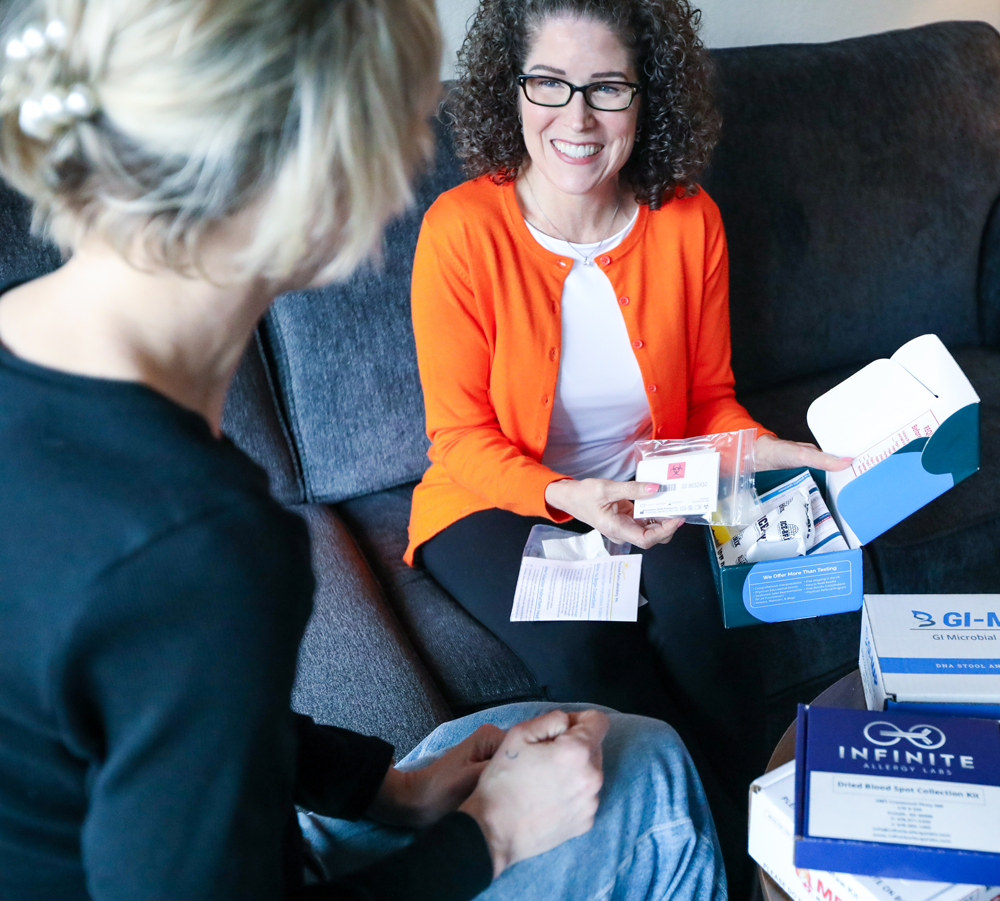
Amy Booth with Radicle Nutrition in Tacoma, WA can provide expert support as a nutritionist.
When it comes to addressing emotional eating, working with a mental health therapist and a nutritionist complement each other to give you more support and help make you more successful in your goals.
If you’re looking for a nutritionist in Tacoma, WA, I recommend Amy Booth with Radicle Nutrition. Amy is a Master Nutritional Therapist & Certified Nutritional Therapy Practitioner. She offers tailored nutritional guidance in a kind and non-judgmental way to help people reach their goals. She works with people in person and online, and you can find out more about her work at https://www.radiclenutritionpnw.com/.
When Is It More Than Emotional Eating?
Emotional eating exists on a spectrum. Many people occasionally eat because they're stressed, celebrating, bored, or having a difficult week. That's part of being human.
There are times, though, when a relationship with food becomes much more distressing and requires specialized care.
You may benefit from seeing a therapist who specializes in eating disorders if you notice things like:
frequent binge eating
purging through vomiting or laxatives
severely restricting food
intense fear of gaining weight
compulsive exercise to "earn" food
feeling completely out of control around eating
avoiding social situations because food is involved
Eating disorders are real mental health conditions that need specialized care from mental health professionals trained in this area. They are treatable, and they're never something to be ashamed of.
If you are wondering if you may have a disordered relationship with food, I'd encourage you to look for a therapist with specialized training in eating disorders. Many people also benefit from working with a registered dietitian and their primary care provider as part of a treatment team.
small steps to address emotional eating today
If you've read this far, you may be wondering what to do next. Real change usually grows out of small moments that are repeated over time. Here are a few ideas that many people find helpful to start becoming more self-aware when it comes to emotions and eating.

Keep a curiosity journal.
For one week, don't focus on changing your eating. Just notice, what happened before you wanted food?
How were you feeling? What did you need? Jot those things down and look for patterns over time. You might begin to notice trends you hadn't seen before, like ruminating negative thoughts about work stress the night before, or loneliness that’s driving you to raid the freezer late at night.
Expand your comfort menu.
If food has been carrying most of the responsibility for helping you feel better, see if you can give yourself a few more options. Here are other sources of comfort you could try:
Texting a friend.
Listening to music.
Taking a walk.
Working in the garden.
Reading for twenty minutes.
Playing with your dog.
Having a bath and a cup of tea.
None of these replace food, but they simply give your nervous system more than one place to find comfort.
Practice talking to yourself differently.
The next time emotional eating happens, notice the first thing you say to yourself. Would you say those same words to your closest friend?
If not, try rewriting the script. You don't have to pretend you're happy about what happened. You can simply become kinder while you're trying to understand it. For instance, you could say to yourself:
I realize now I turned to food not because I was hungry, but because I felt something overwhelming. I give myself permission to be in process with this. What’s important is that I’m learning to address my emotions in better ways. Right now, I am feeling ________. Before I reached for food, I was feeling ___________. I can comfort myself instead with ______________.
Consider getting support.
Sometimes the most courageous thing we can do is stop trying to figure everything out by ourselves. Whether that's working with a therapist, a nutritionist, or both, you don't have to carry this alone.
A Final Thought
One of my favorite things about being a therapist in Tacoma, WA is watching people discover that the habits they've spent years criticizing actually make sense once they understand where those habits came from.
Insight alone doesn’t change anything, but it does bring compassion and self-awareness which can help us make a different choice.
Instead of asking, "What's wrong with me?" you can learn to ask better questions.
"What have I been carrying?"
"What have I been trying to cope with?"
“If I didn’t turn to food, what would I have to feel right now?”
"What would it look like to care for myself differently?"
Those questions tend to lead somewhere much more hopeful.
about the author: kate hagborg, lmhc

Kate Hagborg, LMHC offers in-person therapy in Tacoma, WA and online therapy in WA state as the founder of Destiny City Counseling.
Kate Hagborg, LMHC is a licensed mental health therapist and founder of Destiny City Counseling. If you are looking for in-person therapy in Tacoma, WA or online therapy in WA state, Kate Hagborg provides compassionate support to help you heal and grow. Destiny City Counseling offers brainspotting therapy, which is a gentle, body-based therapy that helps get deeper results than talk therapy alone.
If you’d like help addressing emotional eating patterns and building more self-compassion, self-soothing skills, and to make changes that will last, reach out today for a free 15-minute consultation. And read more articles on mental health at https://www.destinycitycounseling.com/blog.