Ask a Therapist In Tacoma: How to Get Better Sleep
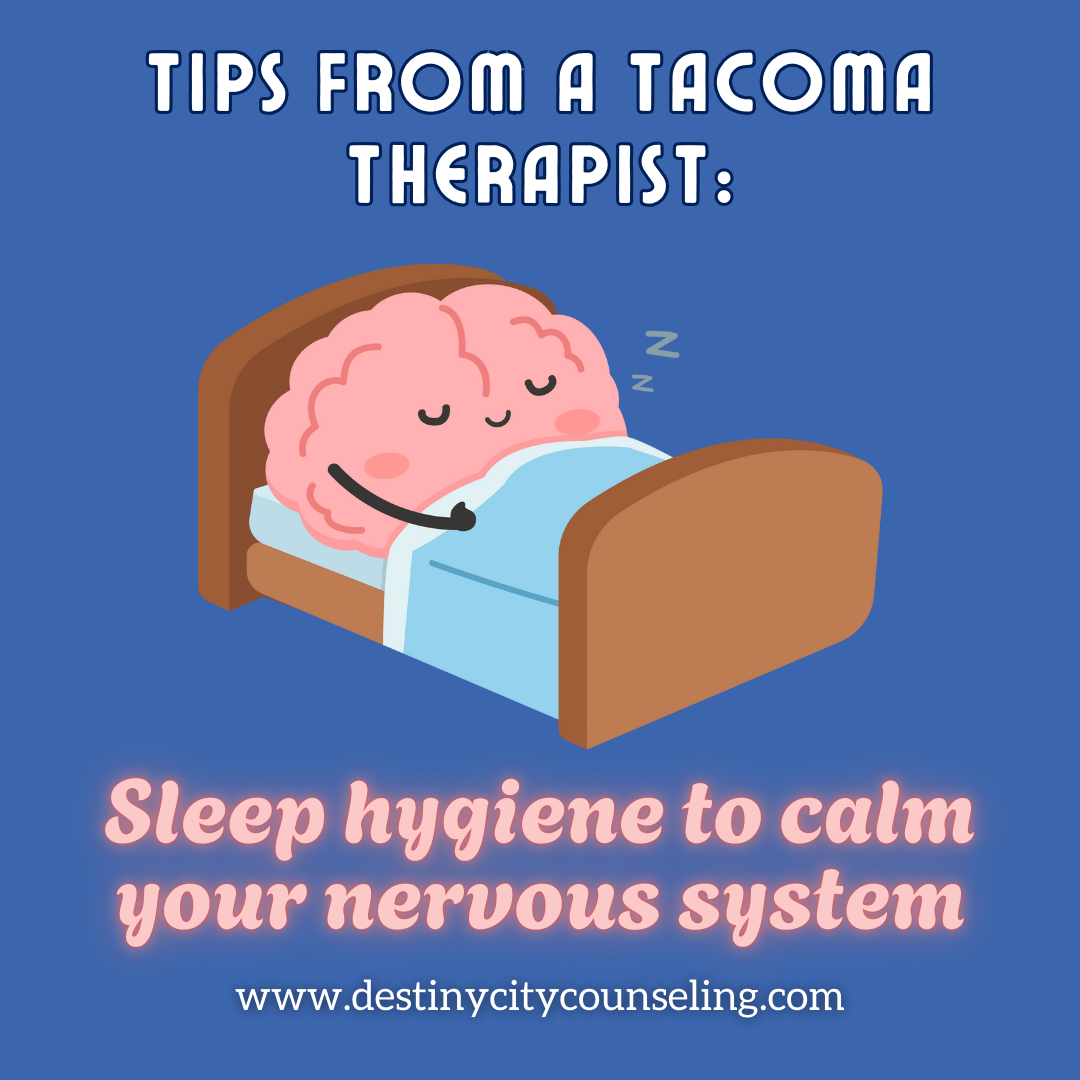
If you told yourself this was the year you’d finally get better sleep—go to bed earlier, stop scrolling, wake up feeling like a functional human—you’re not alone. And if that plan already feels a little derailed, you’re also very much not alone.
As a therapist in Tacoma, I work with a lot of thoughtful, capable people who are frustrated by sleep. They’re doing the right things, reading the articles, trying the tips—and still lying awake at night wondering why their brain won’t shut off. Most of the time, the problem isn’t effort. It’s that sleep is tied to your nervous system, your stress load, and how safe your body feels when everything finally gets quiet.
Let’s talk about sleep hygiene in a way that feels human, flexible, and actually doable—without turning bedtime into another self-improvement project.
Why Better Sleep Starts With Predictability (Not Perfection)
A lot of people assume better sleep means hitting the “right” number of hours every single night. In reality, your brain cares much more about rhythm than totals.
Consistent sleep and wake times help retrain your internal clock, even when some nights are short or restless. Trying to make up for lost sleep by sleeping in usually feels good in the moment—but it often makes the next night harder. Predictability builds safety, and safety is what sleep needs most.
Sleep Hygiene Tips That Calm Your Nervous System (Not Stress It Out)
1. Prioritize a Consistent Wake-Up Time

If sleep has been rocky, this is the single most important place to start.
Waking up at roughly the same time every day helps anchor your circadian rhythm and gives your body a reliable signal about when the day begins. Sleeping in after a rough night is understandable—but it can keep your sleep-wake cycle stuck.
Think of this as playing the long game. You’re teaching your body what to expect, not punishing it for a bad night.
Try to keep this consistent wake up time on the weekend too for best results.
2. Get Morning Sunlight (Yes, Even on Cloudy Days)
Morning light tells your brain, “This is daytime,” which helps melatonin arrive at night.
Clear/sunny days: Aim for 5–10 minutes outside
Cloudy days: Aim for 15–30 minutes
No sunglasses if it’s comfortable for your eyes
This could look like taking your dog for a morning walk, drinking your coffee on the porch, or standing near a bright window if going outside isn’t possible.
Stanford neuroscientist and podcaster Dr. Andrew Huberman has shared extensively on the benefits of morning sunlight for sleep and and general health and you can read more about his science-backed recommendations here.
3. Stop Clock-Watching When You Wake Up at Night
This one is deceptively important.
The moment you check the time, your brain tends to launch into calculations and predictions: “If I fall asleep right now, I’ll only get…” That mental math activates stress—and stress is the opposite of what sleep needs.
If you can, turn the clock away or keep your phone out of reach. Gently remind yourself that knowing the time won’t help you sleep—and not knowing might actually help.
4. Use Supportive Self-Talk When Insomnia Hits

What you say to yourself in the middle of the night can either settle your nervous system or wind it up further.
Instead of thoughts like “I’ll never fall asleep” or “Tomorrow is ruined,” try language that keeps things grounded:
“My body knows how to rest, even if sleep is lighter tonight.”
“I’ve handled tired days before.”
“This is uncomfortable, but I’ll be alright.”
These aren’t positive affirmations. They’re reminders that lower the sense of threat—which often helps sleep return on its own.
5. Don’t Try to Force Sleep
Sleep happens when your nervous system feels safe—not pressured.
The harder you try to make sleep happen, the more alert your body often becomes. If you’ve been awake for a while and feel tense or frustrated, it’s okay to get out of bed and do something low-key in dim light.
Experts recommend trying to fall back asleep for around 20 minutes if you wake up. If after that time you can’t fall back asleep, it can be helpful to get up. Staying in bed longer may reinforce sleeplessness. If you do get up, go into another room and do a boring activity like read a book, do breathing exercises or meditation, or try a puzzle like Sudoku until you feel drowsy.
Do not get on your phone, watch TV or engage with screens or bright lights, and don’t do an activity that is too stimulating. And don’t eat or drink anything except water. For more tips, check out this article from webmd.com.
The goal isn’t to distract yourself endlessly—it’s to remove pressure and let sleep come back naturally.
6. Create a Wind-Down Cue, Not a Perfect Routine
You don’t need an elaborate nighttime routine to sleep well.
One or two repeatable cues—lowering the lights, a cup of tea, stretching, a book, calming music, or a warm bath—can be enough to signal that the day is winding down. Simple habits that you actually stick with are far more effective than perfect routines you abandon after a week.
7. Watch Out for Sleep Tracker Obsession

Sleep trackers can be helpful—but they can also create anxiety.
"Orthosomnia is an unhealthy or excessive concern with achieving the perfect sleep," says Sabra M. Abbott, MD, PhD, a neurologist and sleep medicine expert at Northwestern Medicine who helped coin the term (How Tracking Your Sleep Can Make You Lose Sleep, NorthwesternMedicine.com)
If you notice yourself worrying about your sleep score, second-guessing how rested you feel, or feeling discouraged by the data on your watch, it may be doing more harm than good. Your body’s experience matters more than what an app reports.
Sometimes sleeping better starts with checking less.
8. Be Mindful of Caffeine Timing
Caffeine can linger in the system for 6–8 hours (or longer for some people).
If sleep is a struggle, experiment with cutting caffeine earlier in the day and notice—not judge—the difference.
Try a caffeine curfew of 2pm or earlier and adjust from there.
9. Regulate Stress During the Day
Nighttime is when unprocessed stress shows up.
Short daytime resets help:
Brief walks
Deep breathing
Stretching
Stepping away from screens
Calm doesn’t start at bedtime—it builds throughout the day. Check out this blog I wrote about nervous system regulating exercises you can try throughout your day.
10. Get Thoughts Out of Your Head Before Bed

A simple brain dump can reduce nighttime rumination. Multiple studies have shown that making a to-do list for your tasks tomorrow can promote faster and more restful sleep (Psychology Today).
Grab a journal and allow yourself to free-write, make a list, mind-map, doodle, or whatever you need to do to get your thoughts down on paper.
Write down anything that feels unfinished, stressful, or easy to forget. You’re not solving it—you’re giving your brain permission to rest by showing it the information is stored somewhere safe.
11. When Sleep Feels Stuck, Brainspotting Can Help
Sometimes sleep doesn’t improve even when habits are solid.
In those cases, the issue often isn’t sleep itself—it’s underlying nervous system activation. Brainspotting therapy works by helping the brain and body process stress, anxiety, or trauma that can keep you feeling wired at night.
As a therapist in Tacoma, I use Brainspotting with clients who experience racing thoughts, nighttime anxiety, or chronic insomnia. When the nervous system settles, sleep often becomes easier—without forcing or overthinking it.
If Sleep Is Still Hard, You’re Not Doing It Wrong
Better sleep isn’t about control—it’s about safety, predictability, and compassion.
Small, consistent shifts—paired with compassion and the right support—tend to go much further than rigid rules.
And if sleep continues to feel elusive, working with a therapist in Tacoma who understands sleep and nervous system regulation can help you rest without turning bedtime into another source of stress.