Ask a Therapist in Tacoma: How to set Goals that actually stick
Why Your New Year’s Resolution Ghosted You
Tips from a therapist in Tacoma about setting goals that actually stick.
January is full of optimism. New planners. New gym memberships. New versions of ourselves who definitely wake up at 5 a.m. and love green smoothies.
And then… February hits.
The planner is abandoned. The gym bag is in your trunk judging you. And your New Year’s resolution quietly disappears without explanation.
If this sounds familiar, you’re not lazy or broken. You’re just human—and probably setting goals the way most people do. As a therapist in Tacoma, I see this all the time. The problem usually isn’t motivation. It’s how the goal was designed in the first place.
Let’s talk about the difference between resolutions that fizzle out and goals that actually change your life—using best practices from one of my all-time favorite books, Atomic Habits by James Clear, plus a therapeutic lens (including Brainspotting therapy) to help you turn those January resolutions into lifelong lifestyles.
The Problem With New Year’s Resolutions
Most resolutions fail because they’re:
Too vague (“I want to be healthier”)
Too grand (“I’m going to completely reinvent myself”)
Too disconnected from daily life
Based on shame instead of values
They rely on willpower, which is a limited resource—especially if you’re already managing stress, trauma, anxiety, parenting, work, or all of the above.
A goal that only works when you feel motivated is not a sustainable goal.
The 1% Rule: Small Changes, Big Identity Shifts
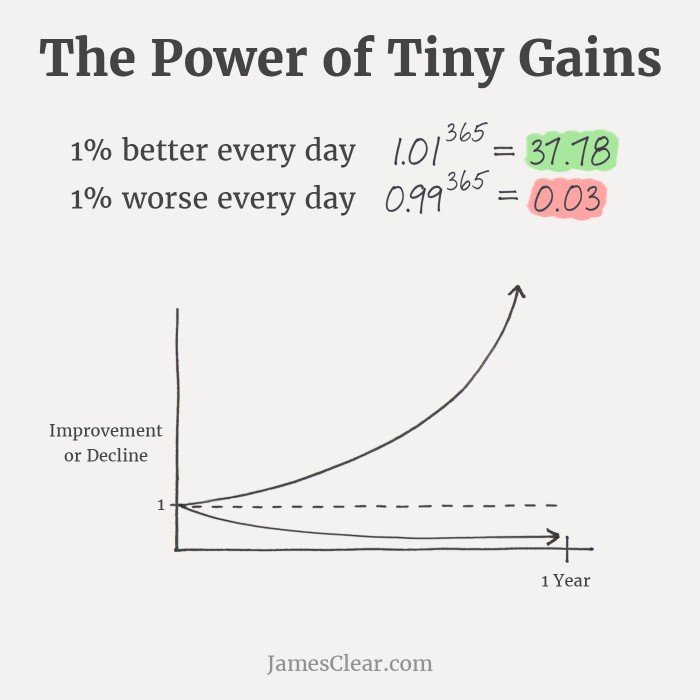
To read more about how tiny changes lead to huge life transformation, check out the book Atomic Habits by James Clear.
One of the most powerful ideas from Atomic Habits is this: getting 1% better every day compounds over time.
You don’t need to overhaul your life. You need to make the smallest possible change that you can repeat.
Instead of:
“I’m going to work out for an hour, five days a week”
Try:
“I’ll do 5 pushups every time I get up from my desk for a break.”
That might not sound impressive, but consistency beats intensity every time. Small habits don’t rely on hype—they rely on reality.
As a therapist in Tacoma, I can tell you this: the goals that stick are the ones that fit into your actual nervous system capacity.
Stop Setting Goals That Are Too Grand
Big goals aren’t bad—but skipping the middle steps is.
Your brain doesn’t resist change because it’s stubborn. It resists because massive goals feel unsafe, overwhelming, or impossible. When a goal feels threatening, your nervous system steps in with procrastination, avoidance, or self-sabotage.
Instead of focusing on the end result, ask:
What does the next smallest version of this goal look like?
What would “showing up imperfectly” look like?
For example, if you’re trying to write a book, let’s say ideally you’d love to write for an hour a day. The only problem is that you rarely have a full hour to devote to writing. And when you don’t, you tend to do nothing. “Oh well, I’ll write tomorrow.” THat’s a sure fire way to never finish your book.
Instead, lower the bar. Try this: “I’ll write one sentence every day.” Pretty soon, you’ve show up for one sentence but it easily turns into 100 words, then a page, then a chapter. Little consistent wins stack up.
Progress doesn’t come from pressure. It comes from approachability. Try lowering the bar—it’s not cheating, it’s effective goal setting.
Plan the Time and Place (This Is a big one!)
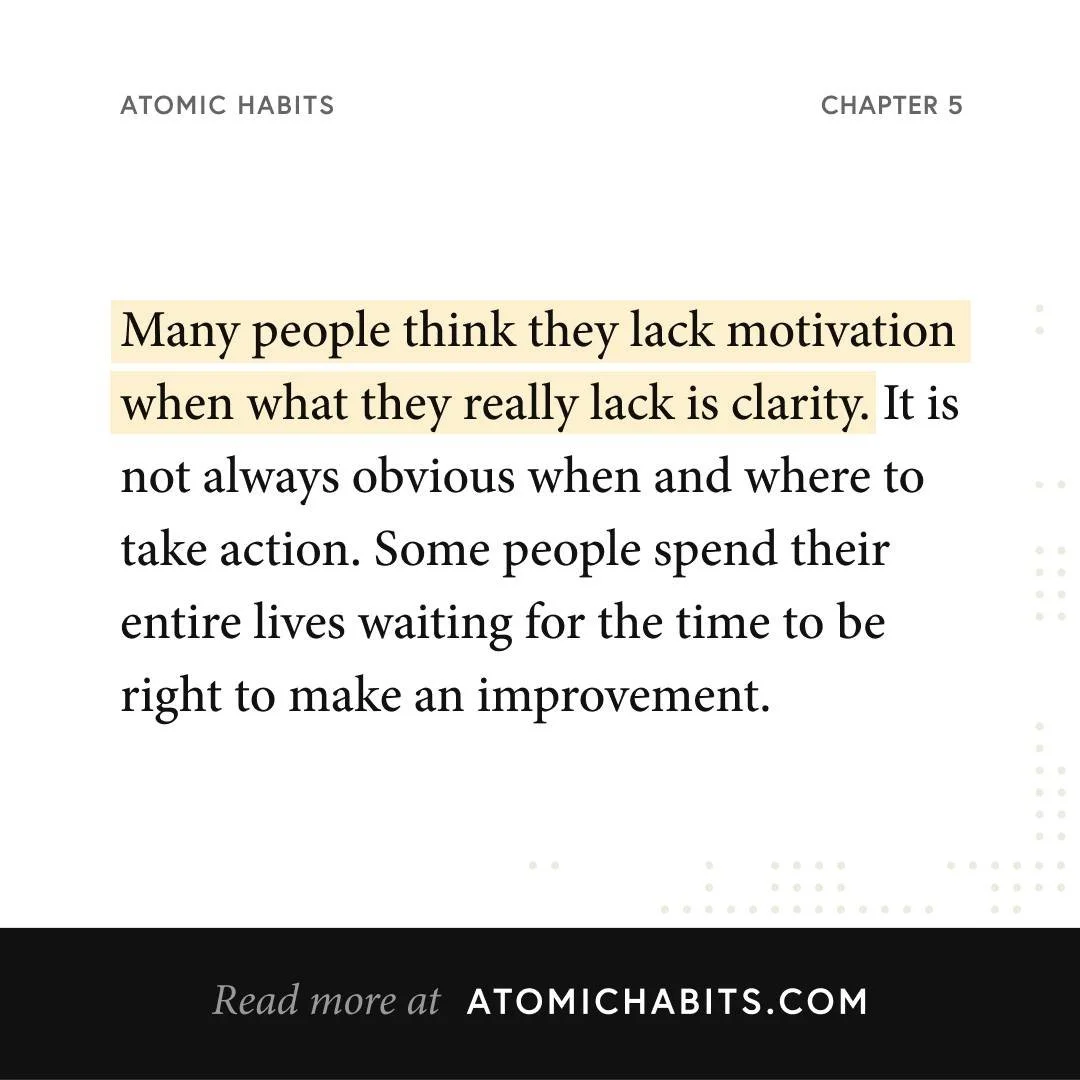
“I’ll do it sometime this week” is not a plan.
James Clear emphasizes that habits stick when you decide when and where they’ll happen. This removes decision fatigue and reduces the mental friction that leads to avoidance.
Try this formula:
“I will [habit] at [time] in [location].”
For example:
“I’ll journal for 3 minutes at 8:30 p.m. on the couch.”
“I’ll stretch for 5 minutes right after I shut down my laptop.”
Motivation is unreliable. Structure is not.
Habit Stacking: Let Your Existing Routines Do the Work

Connecting a new habit to an existing one is one of the most effective strategies for building a new routine.
Habit stacking means attaching a new habit to something you already do automatically.
Examples:
Before I drink my morning coffee, I drink one glass of water.
After I brush my teeth, I do 10 squats.
After I get into bed, I write one sentence in my journal.
You don’t need more discipline. You need better placement.
The “Never Miss Two Days in a Row” Rule
Perfection is the fastest way to quit.
Missing a day is normal. Missing two days is how habits quietly die.
This rule builds self-trust and flexibility at the same time. You don’t spiral into “I already failed, so what’s the point?” thinking. You just gently get back on track.
Consistency is not about never messing up. It’s a chance to learn from what went wrong, make changes, and picking it back up tomorrow.
When Goals Trigger Resistance: Where Brainspotting Comes In
Sometimes your resistance to a goal isn’t about time management—it’s about what the goal represents.

Therapy can help you identify areas of resistance, overcome obstacles, and hold you accountable to being your best self.
Common blocks I see as a therapist in Tacoma include:
Fear of failure or success
Old beliefs like “I don’t follow through”
Trauma stored in the body that makes change feel unsafe
Identity conflicts (“Who am I if I actually do this?”)
Brainspotting works directly with the nervous system to help process these deeper blocks. Instead of trying to “push through” resistance, Brainspotting allows your brain and body to resolve what’s underneath it.
Clients often notice:
Less avoidance
More clarity
A shift from self-criticism to self-trust
A felt sense of becoming the version of themselves they’re working toward
Goal setting isn’t just cognitive. It’s physiological.
From Resolution to Self-Actualization
The most sustainable goals aren’t about fixing yourself—they’re about becoming more of who you already are.
When you:
Make goals small enough to be doable
Attach them to your real life
Work with your nervous system instead of against it
Address internal blocks with tools like Brainspotting
…you stop relying on January motivation and start building identity-based change that lasts the long-haul.
your friendly neighborhood therapist in Tacoma is here to help.
If your resolutions haven’t worked in the past, that’s information—not a character flaw. With better systems, realistic expectations, and support for what’s happening beneath the surface, change becomes less exhausting and more natural.
If you’re curious about exploring goals, habits, or resistance patterns in therapy, working with a therapist in Tacoma who integrates Brainspotting can help you move forward in a way that actually feels sustainable.